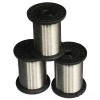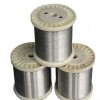



 Click image to view original image


Features of Stainless Steel 330
- Stainless steel 330 is a Nickel, Chromium, Iron and Silicon alloy
- With the addition of silicon, alloy 330 shows enhanced carburization and oxidation resistance under temperatures up to 2100°F.
- This alloy intends to behave similarly under all ranges of temperature.
- This alloy can not be hardened by the heat treatments due to its firm composition.
- 330 steel wire has high strength and resistant to oxidation property which mke it worthy for choosing as industrial heating furnace components.
Chemical Composition of Stainless steel 330
|
C |
Cr |
Co |
Fe |
Pb |
Mn |
Ni |
P |
Si |
S |
Tin |
|
0.08 max |
17 - 20 |
1 max |
Bal. |
0.005 max |
2 max |
34 - 37 |
0.03 max |
0.75 - 1.5 |
0.03 max |
0.025 max |
Various Forms of 330 stainless steel
330 sheet, 330 Plate, 330 Bar, 330 rod coil, 330 threaded bar, 330 Threaded bar, 330 Pipe Hex Nuts and 330 Washers, 330 Expanded metal, 330 Welding Wire and 330 Coated Electrode
Physical Properties of 330 Stainless Steel
|
Density (lb / cu. in.) |
Specific Gravity |
Specific Heat (Btu/lb/Deg F - [32-212 Deg F]) |
Magnetic Permeability |
Modulus of elasticity Tension |
|
0.289 |
7.99 |
0.11 |
1.02 |
28.5 |
The high strength and hardness of 330 steel wire makes it tough to turn in the cold form therefore it requires large force values as compare to normal steel alloys and it provides high spring back. Moreover this alloy wire is easy to weld using GAW methods.
Applications of 330 Stainless Steel Round Bar
- Widely used in large temperature conditions where resistance to the mix effects of heat cycling and carburization are essential.
- 330 steel wire is used in a different furnace parts and gas turbines
- It is used in heat exchangers and ordinary heat treating devices.
- It is used in neutral and cyanide salt containers.